
Beginner field guide · 01
Krav Maga
for Beginners
What to expect, what to practice, and how to spend your first month building judgment—not false confidence.
The short answer
A practical system for getting home safely
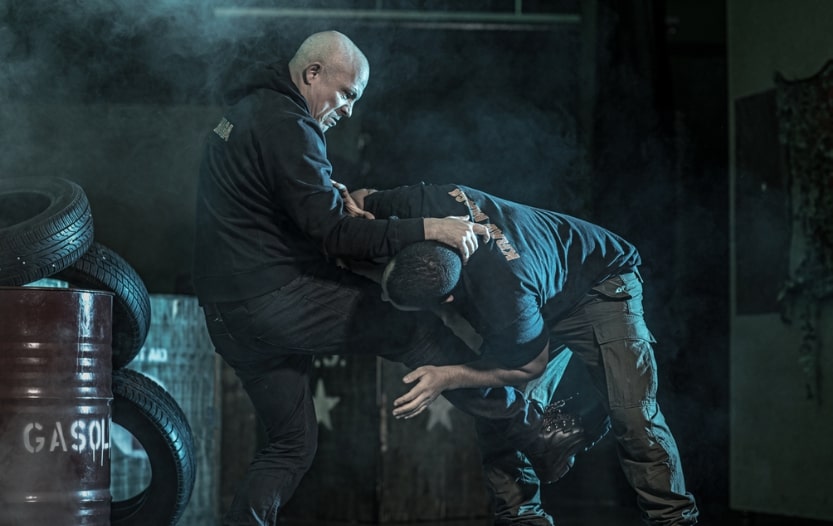
Krav Maga is a self-defense system built around simple movement, awareness, and fast decisions under pressure. Civilian training blends striking, escape work, fitness, and scenario practice.
It is not a shortcut to invincibility. The first lesson is usually the most useful one: notice trouble early, create distance, de-escalate when possible, and leave. Physical force is a last resort when an immediate threat cannot be avoided.
01 · Origin
From street defense to a modern training system
Krav Maga means “contact combat” in Hebrew. Its development is associated with Imi Lichtenfeld, a boxer and wrestler who used his experience to help defend his community in 1930s Bratislava and later taught hand-to-hand combat in Israel.
Modern schools vary. Some focus on civilian safety, others on law enforcement, military applications, or fitness. For a beginner, the instructor’s teaching quality and safety culture matter more than the logo on the wall.
How to vet a school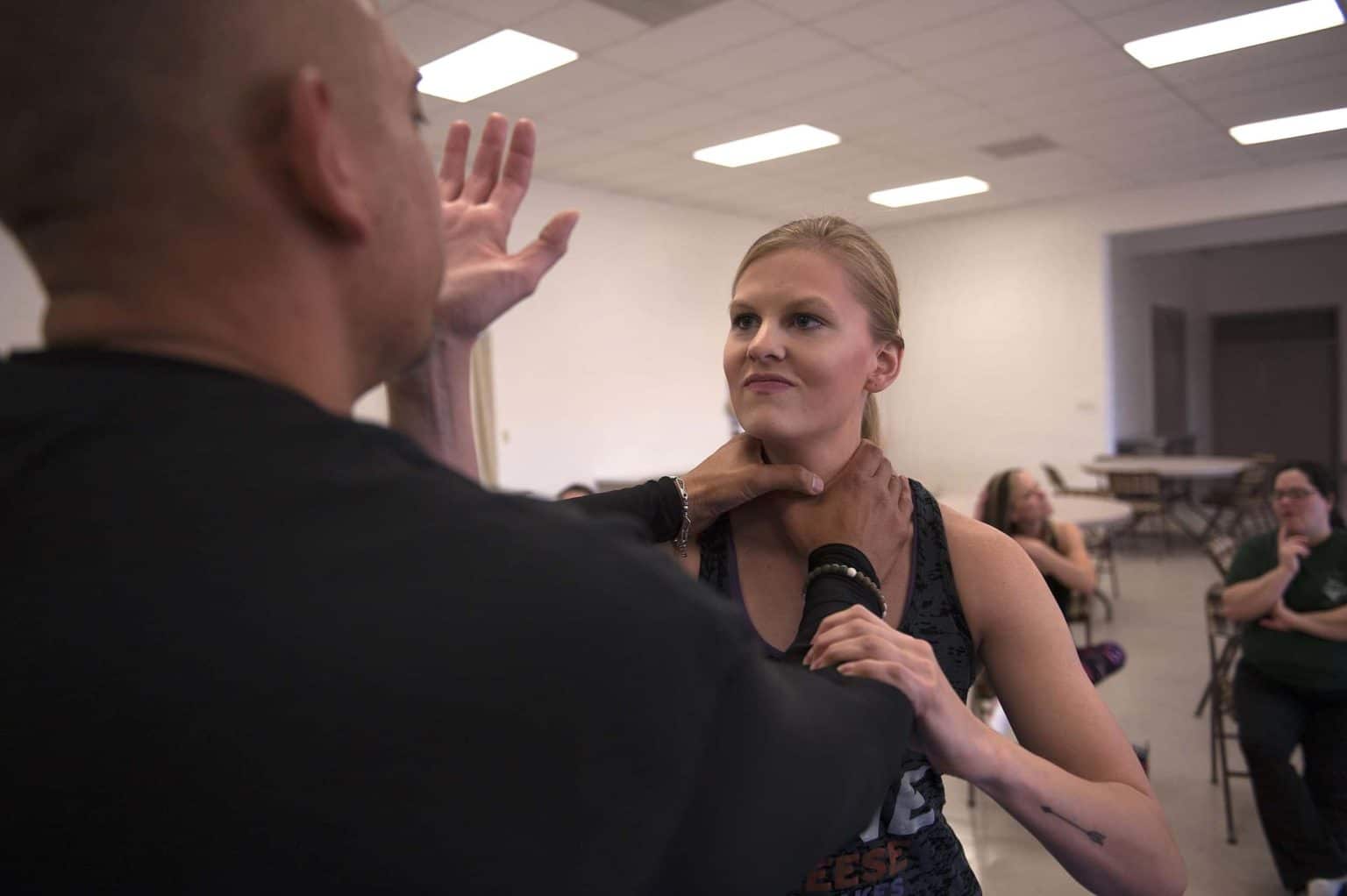
02 · Principles
Four habits before any technique
Krav Maga is less about collecting moves and more about applying a small set of priorities under pressure.

Awareness buys time
Notice exits, distance, hands, obstacles, and changes in behavior. Leaving early is a successful defense.
Look calm, stay ready
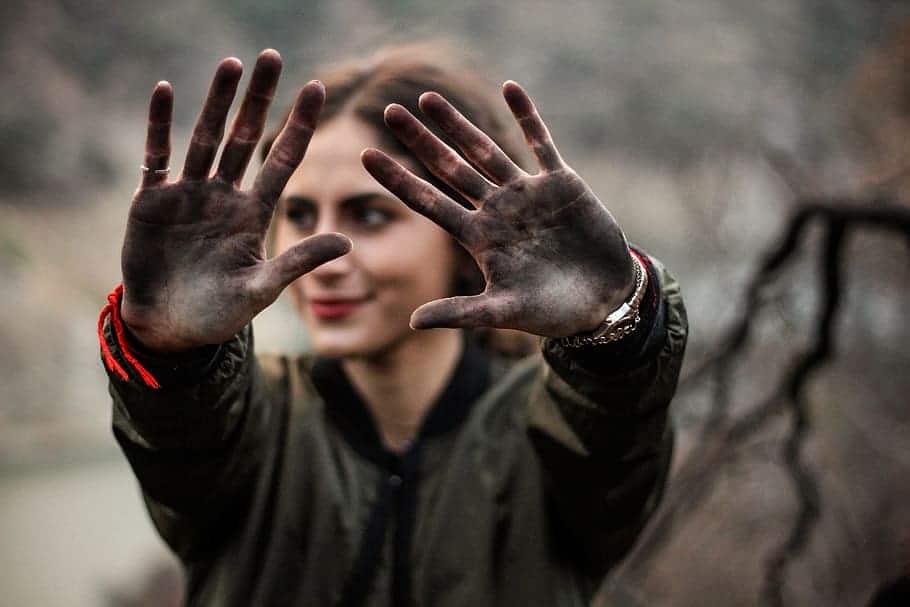
Open hands can support verbal de-escalation while protecting space and keeping options open.
Protect, then move
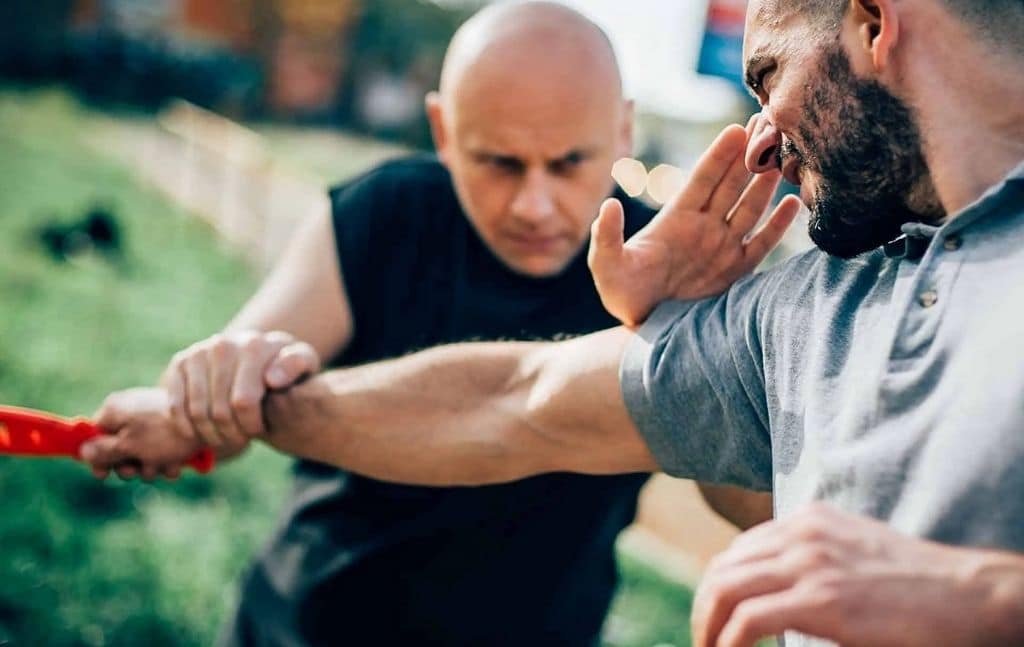
Cover the immediate danger, keep your balance, create a path, and move toward safety.
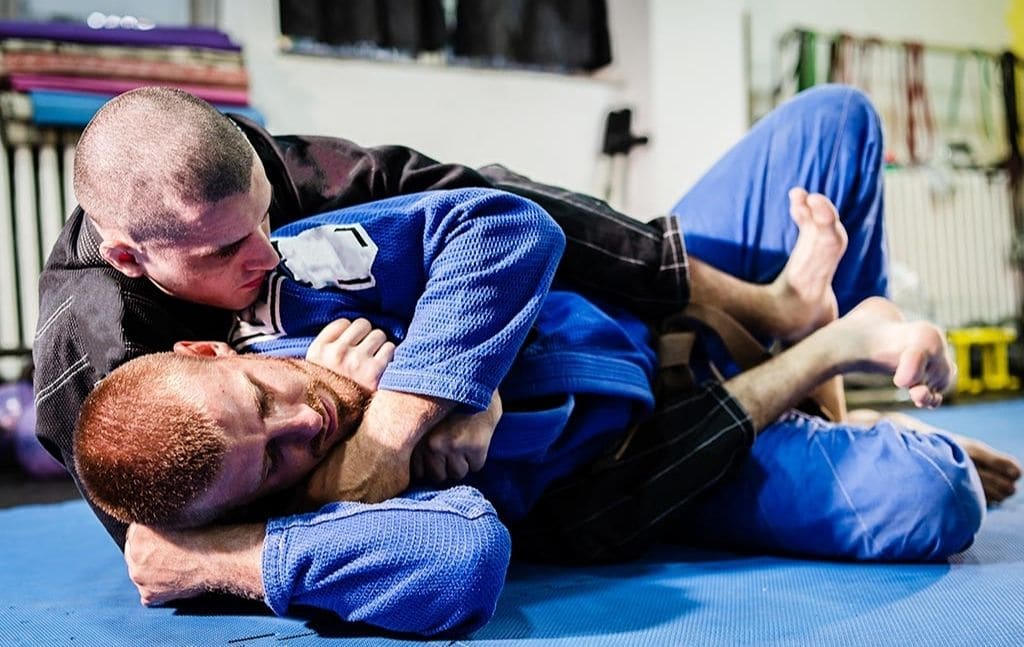
Recover and disengage
Ground skills matter, but pavement, multiple people, and hidden weapons make staying down risky. Regain your feet when safe and exit.
03 · Stances
Start natural. Finish balanced.
Neutral position
Stand comfortably with your head up and hands free—not buried in pockets. The goal is awareness without appearing confrontational.
- Feet at a natural width
- Knees relaxed
- Scan routes out
Interview stance
Angle your body slightly and bring open hands to chest height as you speak. This keeps a boundary without escalating the encounter.
- Use clear verbal limits
- Keep useful distance
- Move toward an exit
Guard stance
If danger is immediate, raise the hands, keep elbows closer to the body, stagger the feet, and stay mobile. Your stance should let you move in any direction.
- Chin comfortably down
- Weight centered
- Hands return to guard
04 · Movement vocabulary
Learn the shapes in a supervised class
These are training categories, not instructions for hurting someone. Beginners should develop balance, alignment, recovery, and decision-making on pads before adding resistance.

Hands return home
A straight punch teaches whole-body coordination: feet and hips support the motion while the opposite hand protects the head. On the mat, accuracy and recovery come before speed or power.
Beginner drill Shadowbox slowly or use focus mitts with a coach. Keep wrists aligned and stop when form breaks down.
Balance before power
Knee and elbow movements are close-range tools. That short distance increases risk, so beginners first learn posture, safe pad placement, and how to regain stance after every repetition.
Beginner drill Use a heavy pad held by an instructor. Never drive a knee or elbow into an unprotected partner.
Address the danger, make space, leave
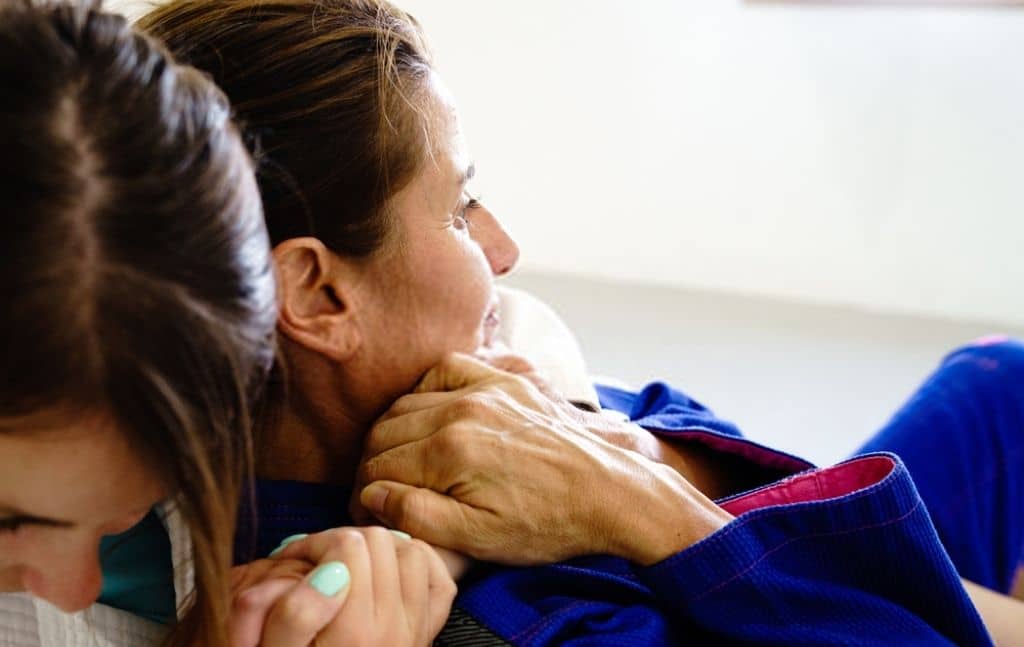
Release drills teach an order of operations: protect the airway, improve position, break the restraint, turn toward safety, and disengage. The exact response changes with the grip and environment.
Safety rule Choke practice needs immediate tap-and-release rules and direct instructor supervision. Never test it at full force.
The red line
Weapon defense is not beginner homework
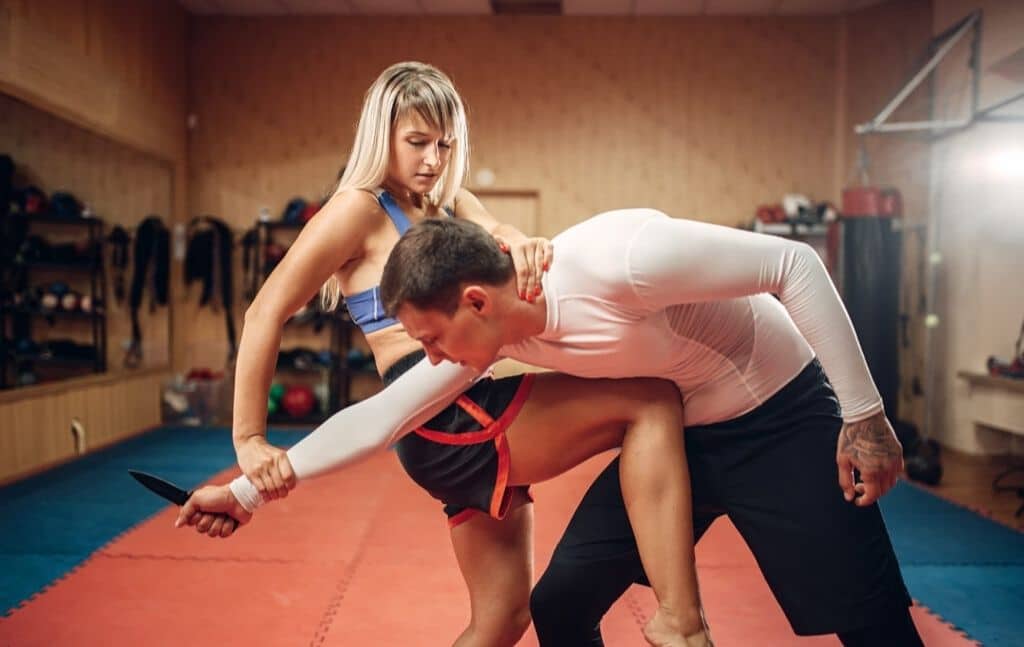
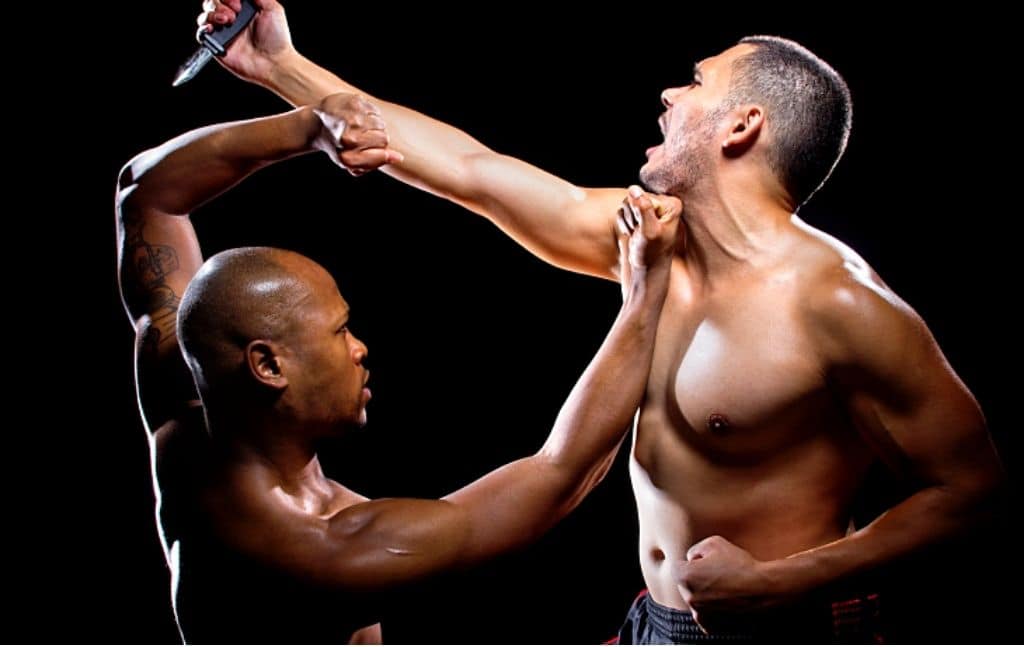
Knife and firearm encounters are chaotic, fast, and potentially fatal. No single move makes them safe. Prioritize distance, barriers, escape, and emergency services whenever possible.
If a school promises an effortless disarm or encourages new students to practice weapon defenses at speed, treat that as a warning sign.
05 · Your first month
A realistic four-week runway
Two coached classes a week is enough to begin. Add easy conditioning, recovery, and notes—then let consistency do the work.
Orient
Learn gym rules, stance, movement, guard, verbal boundaries, and how to hold pads safely.
Goal: feel comfortable being new.Coordinate
Connect footwork to simple palm, punch, and knee mechanics. Reset after every repetition.
Goal: balance before speed.Respond
Add basic covers and releases at low intensity. Practice noticing an exit before engaging.
Goal: protect, move, disengage.Integrate
Combine short sequences on pads while tired, with clear limits and coaching feedback.
Goal: make calm decisions.Before you join
Five signs of a good beginner school
- 01Progressive intensity
New students learn slowly before drills become faster or less predictable.
- 02Clear safety rules
Protective equipment, tap signals, hygiene, and injury reporting are explained.
- 03Respectful coaching
Questions are welcome; intimidation and humiliation are not teaching methods.
- 04Pressure with purpose
Resistance is added to test a skill—not to let advanced students dominate beginners.
- 05Honest claims
Instructors acknowledge uncertainty, legal limits, and the risks of real violence.