
Utility field note · Water access
Sillcock
keys
A compact maintenance tool for tamper-resistant outdoor valves—and a reminder that access, ownership, and water safety are three separate questions.
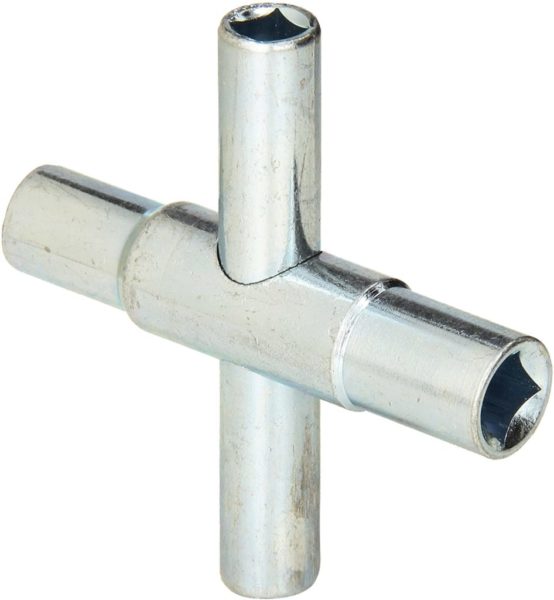
A key fitting a valve does not grant permission to use it. Operate only fixtures you own, maintain, or have explicit authorization to access. During an emergency, follow property owners and local authorities.
01 · Identify
What a sillcock key actually does
A sillcock key is a socket tool that turns a recessed or handle-less outdoor faucet stem. Building staff, plumbers, contractors, and facility teams use it to control service water while discouraging casual operation.
“Water key” can describe several tools. The familiar cross-shaped version usually has four socket sizes for square stems. Other utility and cabinet keys may add triangular, slotted, or specialty profiles.
02 · Choose
Match the tool to the valve—not the marketing
There is no truly universal key. Inspect the fixture you are responsible for before buying a tool.
Four-way cross key
Compact and inexpensive, with four common square sockets. It covers many commercial sillcocks but not every stem or enclosure.
- Best for
- Routine kits
- Tradeoff
- Limited profiles
Multi-profile utility key
Adds several square, triangular, slotted, or stepped profiles for technicians who encounter different service panels and valves.
- Best for
- Facilities work
- Tradeoff
- Bulk and fit variation
Dedicated socket key
A single profile can offer better reach or leverage when you already know the exact valve size and clearance.
- Best for
- Known fixtures
- Tradeoff
- One fit only

03 · Operate
Six checks for authorized use
- 01
Get permission
Confirm ownership, authorization, and any water restrictions before touching the fixture.
- 02
Inspect first
Look for damage, leaks, labels, cross-connection warnings, chemical hoses, or a non-potable marking.
- 03
Seat the correct socket
Place the matching profile fully over the stem. A loose fit can round the valve and damage the tool.
- 04
Open slowly
Turn counterclockwise with light pressure. Stop if the stem binds, leaks, or requires excessive force.
- 05
Collect without contamination
Keep containers and hose ends clean. Do not let them touch the spout or ground.
- 06
Close and verify
Turn clockwise only until flow stops. Check for dripping, remove the tool, and leave the area as found.
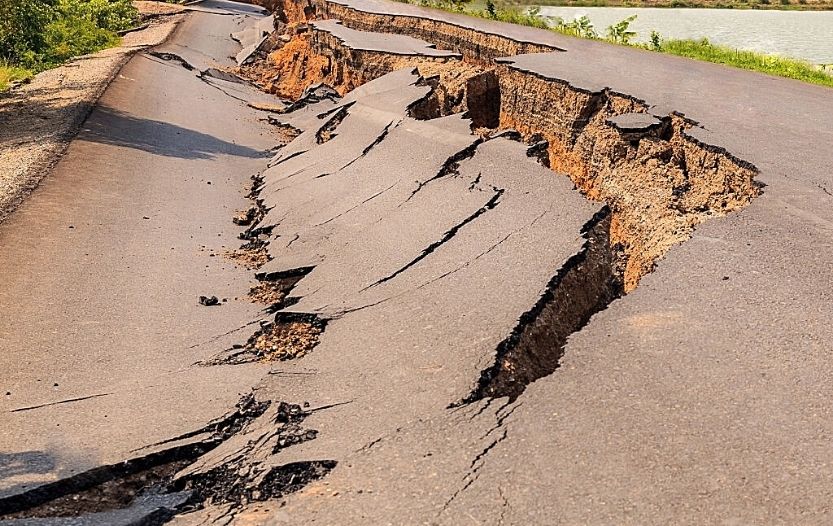
After disruption
Pressure is not proof.
A flowing tap can still deliver unsafe water after a main break, flood, fire, earthquake, loss of pressure, or official boil-water advisory. Industrial sites may also have non-potable systems or contaminated hose connections.
04 · Treat
Decide whether the water is usable
Source verification comes before filtration. Clear water is not automatically safe, and many portable filters do not remove chemicals.
Can the owner identify the system?
Confirm that it is a potable-water line and ask about advisories. A valve near landscaping, boilers, docks, factories, or fire systems deserves extra caution.
Is anything unusual?
Do not use water with fuel or chemical odors, oily sheen, unusual color, nearby flooding, backflow risk, or a non-potable label.
What does local guidance require?
Follow public-health instructions. Boiling or approved disinfection can address many germs, but neither makes chemically contaminated water safe.
Is there a safer source?
Stored bottled water and distribution points are preferable during an advisory. Keep at least a basic household supply before an outage begins.
05 · Pack
A better water-access module
The key is only one component. A practical kit must address permission, collection, treatment, transport, and cleanup.
- ToolKnown-fit sillcock key
- CollectionClean collapsible container
- ConnectionShort food-grade hose + adapter
- TreatmentMethod matched to likely hazards
- VerificationLocal alerts and owner contact
- HygieneGloves and disinfecting wipes
Claims to retire
Three myths that can cause real harm
“Any fitting means free water.”
No. A restricted fixture remains private or controlled infrastructure. Tool ownership is not authorization.
“If it flows, it is clean.”
No. Pressure and appearance reveal little about microbes, chemicals, cross-connections, or current advisories.
“The key is a defensive weapon.”
No. It is a maintenance tool. Carrying or promoting it as a weapon creates needless safety and legal risk.